 Home
Home
 Recipes
 Meal-o-matic
 Meal Planner
 Favorite Foods
 Baby Food Toolkit
 The Dr. Yum Adventure
 Touchpoints
 Log In


The Dr. Yum Project Recipe
Our Approach for Raising Curious Eaters
Serving Size: Children, families, educators, and communities - across generations
Ingredients
Our Founder, Dr. Nimali Fernando:

Rooted in a childhood shaped by Sri Lankan food traditions, I grew up understanding that food was far more than nourishment - it was identity, belonging, and connection. My mother preserved culture through cooking, filling our home with the flavors of fish curry, lentils, and red rice, while also embracing new traditions along the way. Family meals were not optional; they were daily rituals, spaces for conversation, reflection, and growth that quietly instilled the belief that food is one of the most powerful ways we connect.
Years later, as a pediatrician, that early foundation took on new meaning. I saw firsthand how deeply children’s health is shaped by how they eat, encountering the real consequences of a system that makes nourishing families difficult. At the same time, I was raising two busy, very different children of my own, navigating the same pressures and constraints that families everywhere face. Even with my knowledge and experience, feeding my own children well was not simple, revealing a truth that would shape my work: if it’s this hard for someone with every advantage, how can we expect it to be easier for anyone else?
Our Team:
At the Dr. Yum Project, this work is grounded in a deep understanding of the realities families and educators face every day. Across our team, we see parents doing their best within a system that prioritizes convenience over nourishment, educators eager to support children but without a clear playbook for teaching them how to eat, and families navigating time constraints, food insecurity, and sensory challenges. Beneath all of this is a shared desire: to raise children who are healthy, thriving, and able to experience joy in their lives. Our work begins with meeting families and educators where they are, and building practical, supportive pathways that make that vision possible.
Meet the incredible team doing this work every day Here »
Learn more about our inspirational partners in this work Here »
This Urgent Moment:
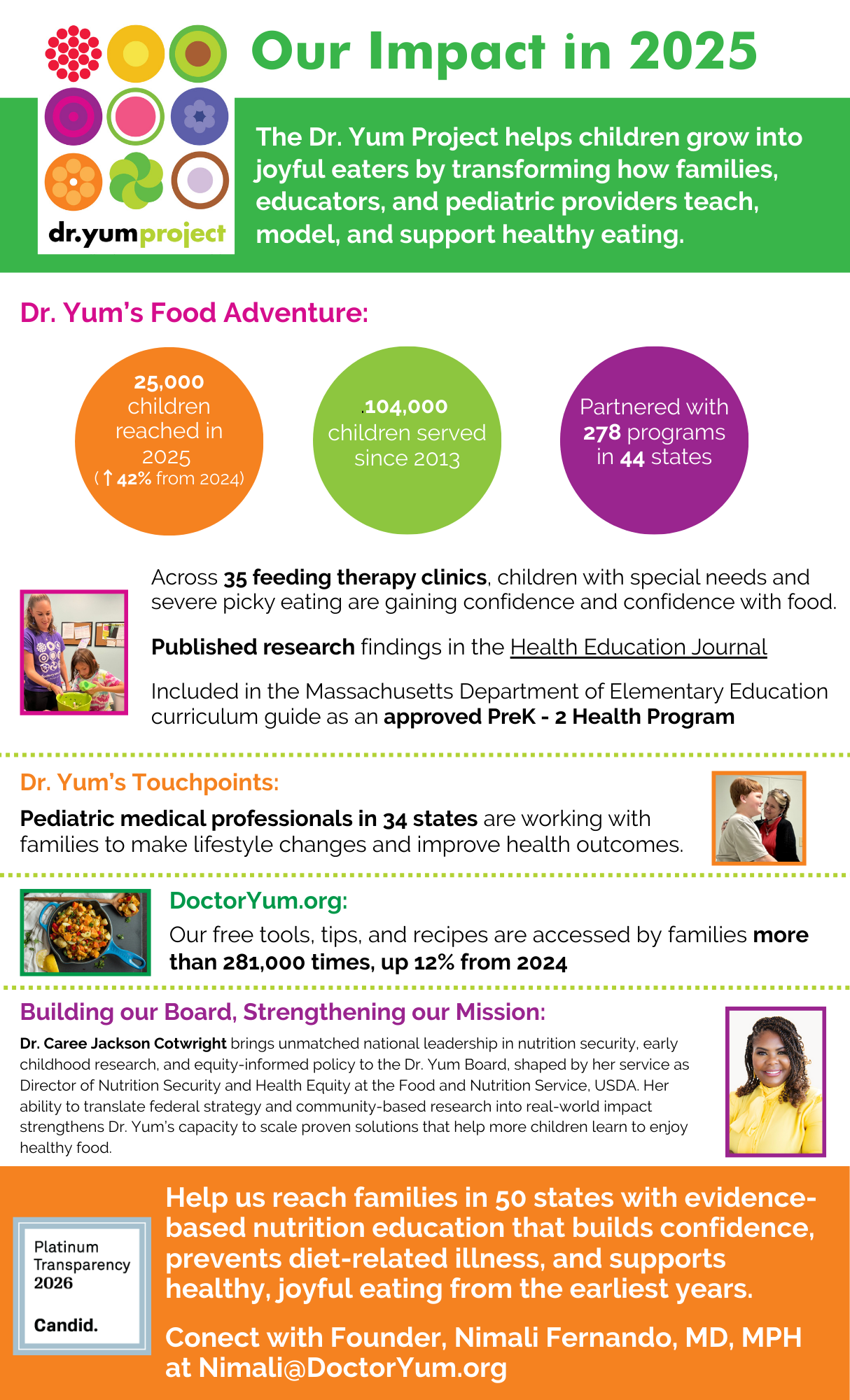
We are facing a pivotal moment. Rates of childhood diet-related illness continue to rise, while an entire generation of children — and many adults — have grown up without ever being taught how to eat in a way that supports their health and well-being. What is becoming increasingly clear is that feeding is not something children simply “pick up” or instinctively know how to do; it is a developmental skill, one that must be intentionally taught, practiced, and supported over time. We're so proud of our impact. Read more (below).
Our Easy-to-Follow Steps
At the Dr. Yum Project, this work goes far beyond nutrition. It is a public health strategy, addressing the root causes of diet-related disease before they take hold. It is equity work, ensuring that every child, regardless of background or access, has the opportunity to develop the skills needed to engage with healthy food. And it is culture change, shifting how we think about feeding from pressure and preference to practice and development. Because the future of our food system doesn’t just depend on what we grow, it depends on what we teach, and whether we equip the next generation to approach food with curiosity, confidence, and connection.
Whether this is your hundredth recipe or your first with the Dr. Yum Project, we also follow the same steps (and PS - you're lookin' for more recipes, our library is endless!):
- Start with the connection. Recognize that food is more than fuel—it’s how we build relationships, identity, and belonging.
- Name the real problem. Feeding children isn’t about willpower or character. It’s a skill—one that must be taught, practiced, and supported.
- Shift the approach. Treat feeding like we treat reading: with modeling, repetition, encouragement, and zero shame. Instead of “picky eaters,” children are “learning eaters.”
- Create space for practice. Give children opportunities to taste, explore, and prepare food—early and often.
- Support the adults. Equip parents, caregivers, and educators with tools that are practical, joyful, and judgment-free.
Once baked, you let cool and the hopeful result of this recipe (and the work of the Dr. Yum Project) is a generation of children who approach food with curiosity and openness, who feel confident in their choices, and who are deeply connected to their bodies and cultural identities. These are children who are not only nourished in the moment, but who carry with them lifelong skills that support their health, well-being, and sense of belonging.**
Our Signature Dishes
Chef’s Note: If feeding kids feels hard, you’re not alone. It was hard for us too. That’s exactly why we built this.
Our Impact