
 Home
Home
 Recipes
 Meal-o-matic
 Meal Planner
 Favorite Foods
 Baby Food Toolkit
 The Dr. Yum Adventure
 Touchpoints
 Log In


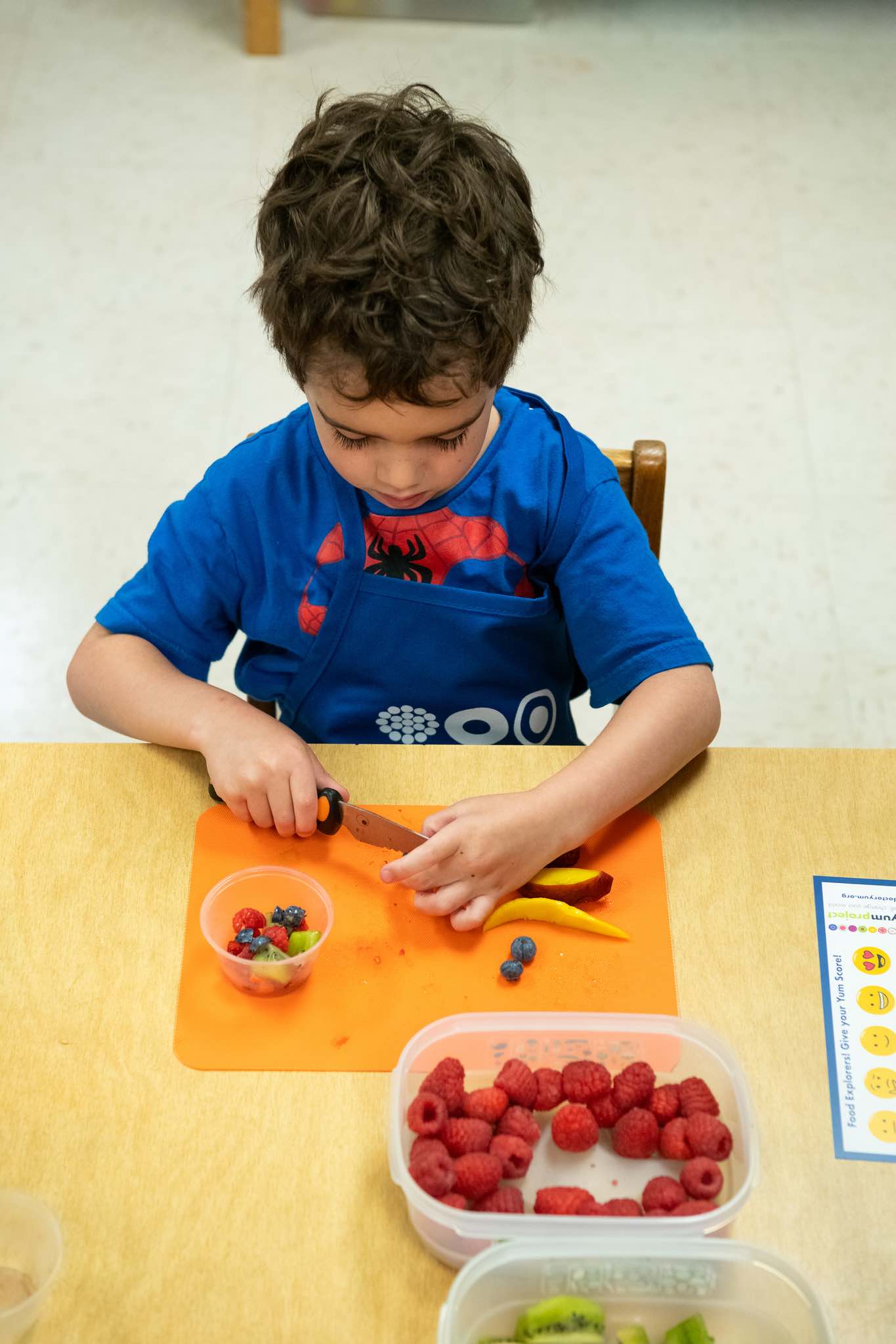
As a pediatrician with over two decades of experience and 13 years as a nonprofit founder, I have learned one important lesson. Children can transform food systems. But we need to teach kids HOW to eat as thoughtfully as we teach them other skills like reading, otherwise we are not harnessing this transformational power.
What do I mean? Try thinking of it this way: if you are the parent of young children, your home is a “food system,” and you are the Chief Operating Officer of your kitchen, planning and preparing three meals and two snacks a day. This amounts to 35 eating experiences a week, made-to-order for some very small but discerning customers. Studies of families with young children show that these little decision-makers are often influential enough that the whole food system may revolve around their preferences. In the spirit of efficiency, adults in charge may sacrifice their own nutrition and preferences to satisfy their children, eating chicken nuggets and mac and cheese more often than more flavorful, healthy options they enjoyed before becoming parents.
In talking with people in charge of larger food systems, such as school districts, fruit-and-veggie prescription programs, and food banks, a clear and common theme emerges. When children are not learning to try new foods, the nutritious foods donated by well-meaning programming may often go to waste.
A great example of this comes from the school district where our work originated. In Fredericksburg, Virginia, Food Services Director Brian Kiernan, a former Chef with a passion for serving nutritious, scratch-cooked meals to the kids in his district, noticed many of the meals his team worked so hard to create were going uneaten. Meanwhile, the district’s Head Start program saw a high proportion of children in a very high BMI category. While the program’s health advisory board looked for ways to address this health crisis, Brian discovered a solution he thought might help address obesity AND his frustration with food waste. Dr. Yum’s Food Adventure was first implemented in 2013 in eight pilot schools, showing teachers how to teach kids to eat using a framework and methodology similar to those for teaching reading with a developmental lens. When Brian discovered that kids were learning to “practice” food, he thought, “This could be the answer!”
In 2014, the Head Start classrooms in Fredericksburg became the first in the US to pilot Dr. Yum’s Food Adventure and learned how to teach children the skill of eating. Teachers were taught how to model healthy eating and curiosity about food, to understand picky eating behaviors, and help kids with feeding challenges rather than labeling them as “picky.” Learning the importance of repeated exposure to new foods, Brian decided that when the kids in pre-K were learning about broccoli, he should put it on the menu several times, prepared in different ways, to give them more chances to practice. When he saw how much more broccoli four and five-year-olds were eating, he made sure that elementary, middle, and high school students also had similar repeated exposures to fruits and vegetables on their menus.
After three years of implementing the program, the proportion of pre-K students with high BMI decreased by 70%, demand for fruits and vegetables soared, and participation in the school lunch program increased. After ten years, Fredericksburg spends more per student on fruits and vegetables than any school in Virginia.
As our program has grown and now includes schools in 43 states, we see that kids often go home after a Food Adventure lesson they enjoyed, armed with a recipe and a demand to make that recipe at home, helping families to feel more confident about buying fruits and vegetables without the risk of food waste. Just as powerful is the fact that 80% of teachers who use the Food Adventure and, through their training, learn that modeling a curiosity about food is vital, report that they and their families are now eating better.
For families in underserved communities, where repeated exposure to new foods may be limited by access, early school-based food education can lay the foundation for healthy eating. When teachers understand child feeding development, model curiosity about unfamiliar foods, and offer thoughtful, repeated exposure, they become powerful partners in shaping better nutrition. This approach not only supports children, including those with feeding challenges, but also helps parents and grandparents improve their own eating habits.
Every hunger initiative should be asking, “How are we teaching all children to eat the foods we are providing?” Now imagine if every preschool and kindergarten teacher were trained to teach eating skills with the same confidence they bring to reading and writing. An upstream intervention at that scale could unlock children’s power to influence food systems and strengthen anti-hunger efforts nationwide, greeting generational improvements in long-term health. As we create more awareness, backed by strong data and a commitment to early food education, I truly believe it’s possible.