
 Home
Home
 Recipes
 Meal-o-matic
 Meal Planner
 Favorite Foods
 Baby Food Toolkit
 The Dr. Yum Adventure
 Touchpoints
 Log In


Welcome back to another episode of Nutrition Chats with Dietitian Dianna!
Today, we’re talking all about food labels. They can feel overwhelming at first, but once you know what to look for, they become a really helpful tool, especially when we start teaching our kids how to use them early on.
Curious to learn how to read food labels with more confidence? Let’s dive in!
Why nutrition labels matter (especially for kids):
Food labels are like clues. They help us understand what’s inside our food so we can support our bodies by having energy to learn and grow, building strong muscles and bones, and creating a healthy, balanced relationship with food from a young age.
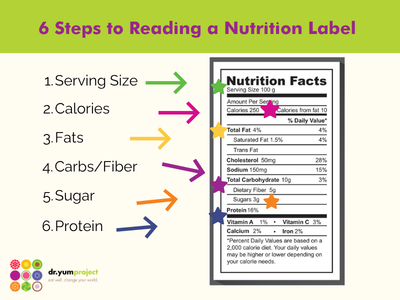
Step 1: Start with the serving size
This should always be the first thing we look at. The serving size tells us how much food the label is referring to, because many packages contain more than one serving. Understanding this helps everything else on the label make more sense.
Step 2: Look at the calories
Calories are simply a unit of energy, kind of like gas in a car. A kid-friendly way to explain this is that calories help us run, play, learn, and jump. We don’t need to count calories; we just want to notice whether a food is likely to give us lasting energy or quick energy.
Step 3: Fats are NOT the enemy
Fats play a crucial role in kids’ growth and development. They support brain health, hormone production, and overall development. When reading food labels, we want to look for healthy fats, especially unsaturated fats. Foods like nuts, avocados, and olive oil are great sources. Fat in food is not something to fear, it’s necessary, nourishing, and helps keep kids full and satisfied.
Step 4: Find the carbohydrates and fiber
Carbohydrates are the body’s main source of fuel, and yes, we need them! One important type of carbohydrate is fiber. Fiber helps keep digestion running smoothly and supports regular bowel movements. A good goal is to look for foods with at least 2–3 grams of fiber per serving. Fiber is found in foods like fruits, vegetables, whole grains, and legumes.
Step 5: Look out for added sugar
Added sugars are something we want to be mindful of, with a general goal of keeping them to no more than about 10% of our total intake. Not all sugar is the same, though. Sugar that comes naturally from foods like fruit and milk is completely normal, and actually beneficial, because it comes packaged with vitamins, minerals, and fiber.
A simple way to explain this to kids is: “Fruit gives us sugar and vitamins. Candy gives us sugar without many vitamins or nutrients.” Candy can absolutely still fit, but helping kids understand the difference teaches balance, not fear, and builds a healthy relationship with food.
Step 6: Check the protein
Protein helps build strong muscles, hair, and nails, and it helps keep our tummies full. A general guideline for a “high-protein” food is around 10 grams of protein per 100 calories, but just because a food doesn’t meet that doesn’t mean it isn’t nutritious. Peanut butter is a great example, it isn’t considered high protein, but it still provides quality protein along with healthy fats that help keep kids satisfied and fueled.
At the end of the day, food labels are simply a tool to help guide our choices, not something to stress over or use as a rulebook. When we understand how to read them and know which nutrients to look for, we’re better equipped to choose foods that support energy, growth, and overall health. Teaching these skills early helps kids build confidence around food, develop awareness without fear, and create a foundation for a healthy, balanced relationship with eating that can last a lifetime.
Want more fun, approachable nutrition tips? Be sure to check out our next blog post!
Until next time, your favorite Dietitian Dianna